


Ask most founders for their strategy, and they’ll hand you their roadmap.
In this conversation, Andrew Skotzko shares why a plan with no strategy behind it will never get you where you need to go, and what to start with instead: a few informed bets.
We cover:
The basic human need we’re wired for that prevents us from thinking strategically
The power of a quick strategy sketch you can do in under an hour
Why segmentation is the most impactful, and overlooked, choice in strategy
Andrew also walks us through why crafting a strategy is less than half the work, the value thesis, and the Strategy Grid, a one-page way to lay out your bets.
We close on where OKRs belong in his framework, how often to revisit your strategy, where AI can help, and where it should never be used.
My Guest: Andrew Skotzko is a product leadership coach and strategy advisor. He spent 15 years building products across nine industries, from startups to the Fortune 100. He now coaches and advises product leaders at companies including Google, GitHub, Asana, Intuit, and HubSpot, and has taught product strategy at USC’s Marshall School of Business. He hosted the Make Things That Matter product management podcast. His new book is The Strategy Cycle: A Field Guide to Leading Product Strategy by Making Better Bets (2026).
Conversation Highlights
02:38 – Andrew:
“I’m not anti-planning, but what I am against is plans as a replacement for strategy. Plans are supposed to operationalize strategy, not replace it.”
04:14 – Andrew:
“The fundamental mindset shift is accepting that there is no guarantee. There are only better odds.”
06:40 – Andrew:
“Strategy is the art of using what you control to impact what you don’t. Most especially customers.”
11:59 – Mike:
“If you’re targeting the wrong customer who’s not interested in your product and never will be, there’s no amount of execution or pushing that will ever get that done.”
29:32 – Andrew:
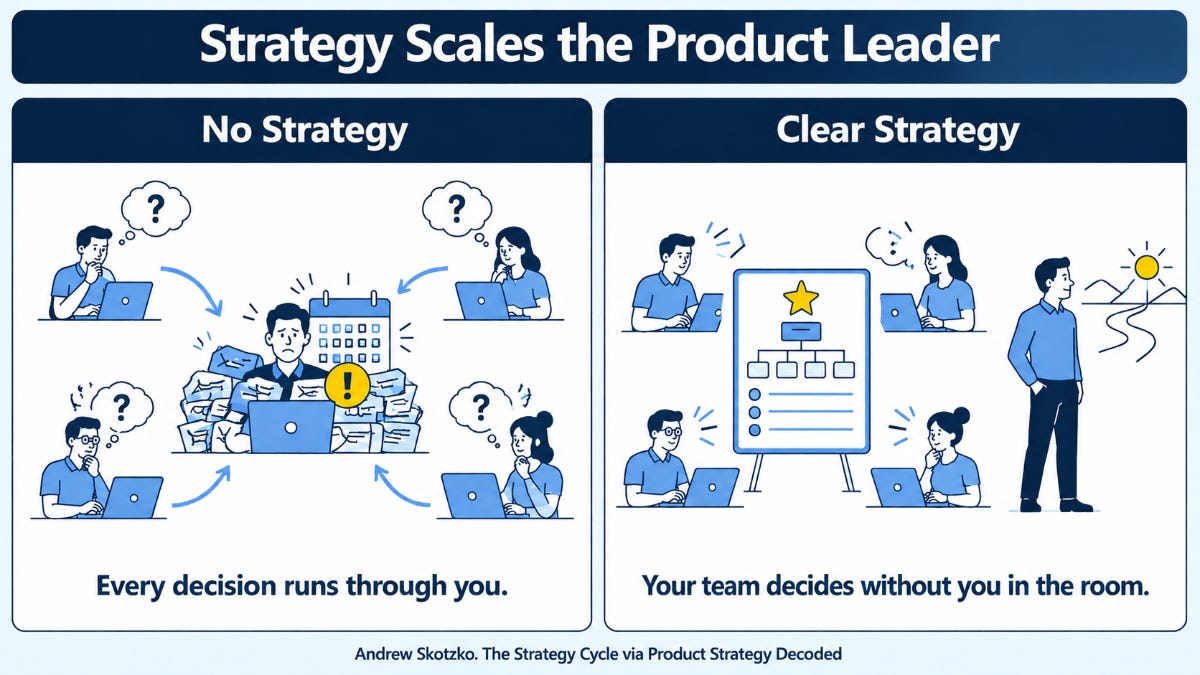
“[A strategy] should be helping your PMs make the right decisions even when you’re not in the room.”
Key takeaways
Check whether you have a strategy or a plan. Roadmaps, goal lists, and big vision statements are planning artifacts. They help operationalize strategy, but should never take the place of one.
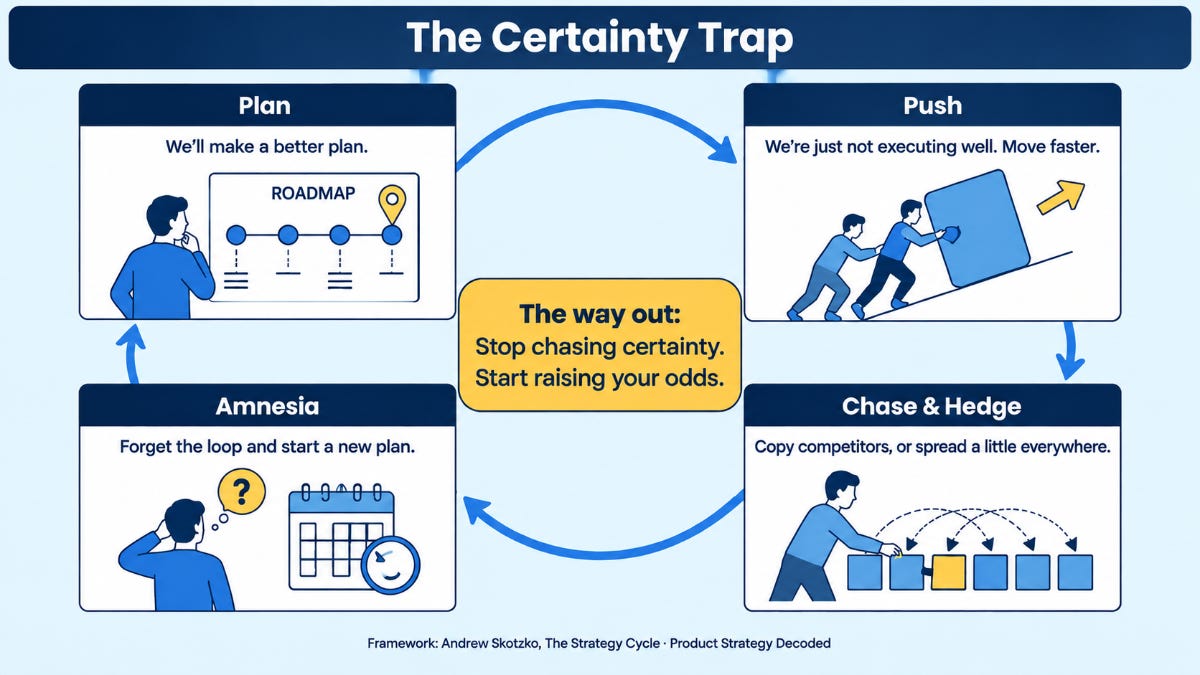
Forget chasing absolute certainty. Look to increase your odds instead. The certainty trap runs in a loop: plan, push harder, then chase competitors or hedge with a little of everything. Breaking it starts with accepting there are no guarantees.
Sketch before you build. Andrew recommends spending under an hour writing down the strategy you’re already following. Then rapidly lay out a few alternatives. Sketching for just 20 minutes can quickly expose gaps in your thinking before you waste time pursuing unproductive bets.
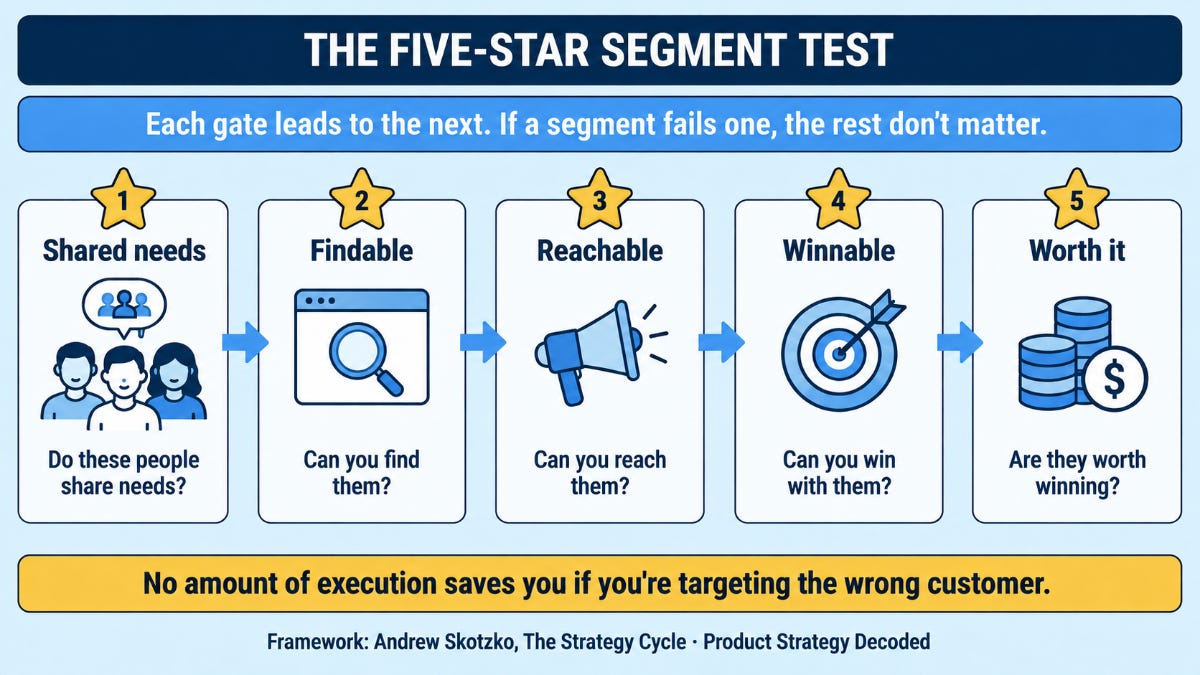
Start with segmentation. Good segmentation is specific (three to seven attributes of your bullseye customer), tailored to your product, and ranked. Test each segment in order: shared needs, findable, reachable, winnable, worth it.
Write the value thesis as one statement. Who it’s for, what problem it solves, why they’ll choose you over alternatives, and why it’s hard to copy. Andrew was surprised how many leaders he coached who singled this out as the most useful step.
Use your strategy as the first filter on ideas. PM Leaders with an explicit strategy get air cover to say not “no,” but “not now.” Without one, every decision comes back to you, the leader.
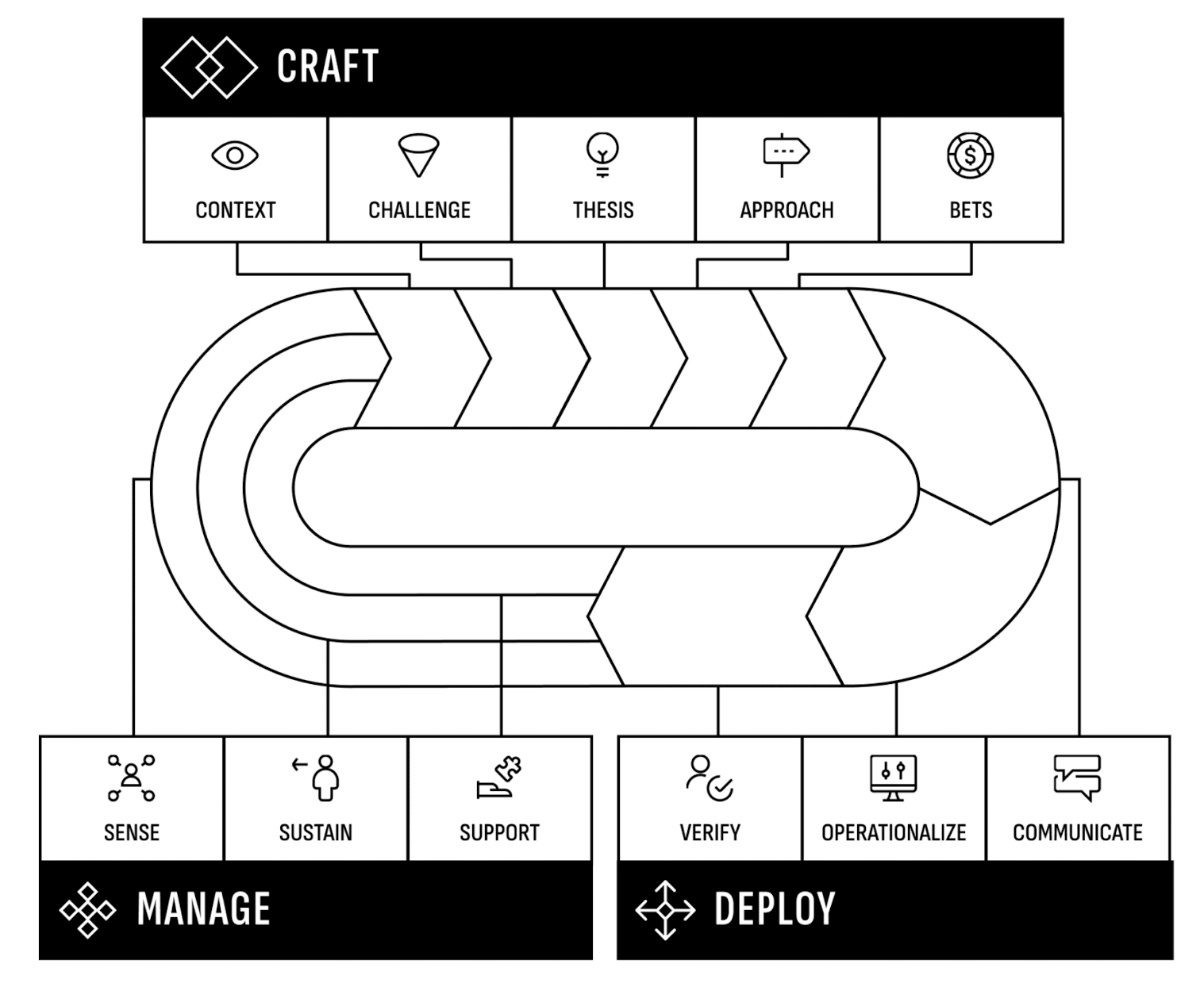
Budget for deploying and managing, not just crafting. The “Craft” phase is what everyone pays attention to, but it’s only about 40% of the work over time. The real work happens in the “Deploy” and “Manage” phases.
Show Notes
Full Chapter Breakdown
00:00 Welcome and introduction
00:47 What founders hand you when you ask for their strategy
01:45 Counterfeit strategy: when plans replace strategy
03:14 Strategy as an evolving theory of winning
03:50 The certainty trap: no guarantees, only better odds
05:11 Theory, winning, evolving: the three words that matter
06:37 Using what you control to impact what you don’t
09:24 The fast strategy sketch
11:51 Why segmentation is the most important strategic choice
12:50 The value thesis: who, what, why us, why hard to copy
14:36 Good segmentation: specific, tailored, ranked
17:52 Reshaping a stakeholder roadmap around bets
20:27 Writing the value thesis as a single statement
21:54 The Strategy Grid: themes, outcomes, opportunities, initiatives
23:42 Why initiatives are only “potential”
26:09 When a stakeholder’s feature request cuts against the strategy
28:23 Strategy as air cover for decisions you’re not in the room for
30:26 Craft, Deploy, & Manage: the three phases of the Strategy Cycle
32:58 Where OKRs and roadmaps belong
35:02 Refresh, rebuild, reinvent: how often to revisit strategy
39:43 Book recommendations
43:02 What AI changes about strategy work, and what it doesn’t
46:03 Strategy is mental, social, and emotional
47:43 One thing to do this week
Get started with Andrew’s work
Head over to https://thestrategycycle.com/decoded/ to get the first two chapters and the Strategy Sketch Starter Kit for free, exclusive for Product Strategy Decoded readers & listeners.
Andrew’s website: makethingsthatmatter.com
Things we touched on in the book
The 13 traps that derail good strategies: end of Chapter 2
The five-star segment test: Chapter 5
Andrew’s recommended strategy reading list: Appendix, Recommended Resources.
People and ideas mentioned
Rich Mironov shares insights about money stories and ways to tie roadmap work to expected outcomes in his Product Bytes newsletter.
Marty Cagan on how few shipped features deliver the results teams expect: The Inconvenient Truth About Product
Teresa Torres’s Product at Heart 2023 keynote, Even You Can Do Continuous Discovery, recommended for PMs stuck facing stakeholder-driven requests with zero strategic clarity.
Andrew’s book recommendations
Understanding Michael Porter by Joan Magretta
Obviously Awesome by April Dunford
Incorruptible: Why Good Companies Go Bad and How Great Companies Stay Great by Eric Ries


